Bed Bug (Cimex lectularius)
Identification
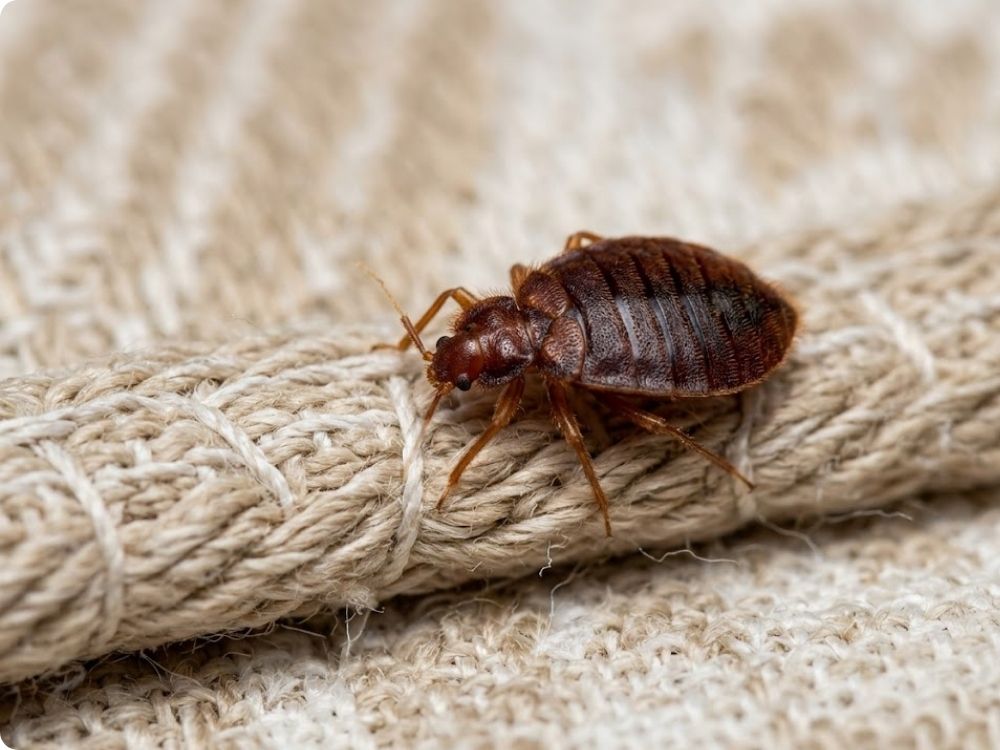
Adult bed bugs are flat, oval, reddish-brown insects about the size of an apple seed — ¼ inch long. After feeding, they become elongated and swollen with a darker red color. Nymphs are smaller and translucent-to-white, making them extremely difficult to see against light-colored bedding and mattress surfaces. Eggs are pearlescent white, about 1mm long, and cemented to surfaces in clusters.
Bed bugs do not fly and do not jump. They crawl, and they are remarkably flat — thin enough to hide in the seam of a mattress, inside a screw hole in a bed frame, or behind an electrical outlet cover plate.
How Bed Bugs Spread in Brownsville
Bed bugs are hitchhikers — they travel on luggage, clothing, furniture, and personal items. In Brownsville, we see three primary spread vectors. First, South Padre Island vacation rentals and hotels with high guest turnover introduce bed bugs through traveler luggage. Second, apartment complexes where bed bugs migrate between units through shared wall voids, electrical conduit, and plumbing chases. Third, used furniture — mattresses, couches, and bed frames purchased secondhand or collected from curbside.
Bed bugs are not a hygiene issue — clean homes get them as readily as dirty ones. The only factor is proximity to an infested source.
Signs of Infestation
Itchy red bites in a linear or clustered pattern, typically on exposed skin (arms, shoulders, neck, face) found upon waking. Small blood spots on sheets from crushed bugs or post-feeding drips. Dark fecal spots (digested blood) on mattress seams, sheet edges, and behind headboards — these look like tiny ink dots. Cast skins (translucent husks shed as nymphs grow). A sweet, musty odor in heavy infestations.
Why Bed Bugs Are Difficult to Eliminate
Bed bugs resist many common insecticides due to evolved resistance in modern populations. They can survive months without feeding, meaning vacating a room does not starve them out. Their flat bodies hide in crevices that spray cannot reach. Effective treatment takes one of two routes. One is professional heat treatment, raising the room above 120°F across every harborage area, which is our bed bug heat treatment process. The other is systematic chemical treatment of every crack, crevice, and void where bugs and eggs hide, usually over two or more visits.
Think you have bed bugs? Call us.
Call (831) 703-7142 — Mon–Sat 7AM–7PM. No forms, just a real local team.
Call (831) 703-7142