Centipede and Millipede Control in Brownsville, TX
Treatment for centipede and millipede invasions driven by Gulf Coast moisture.
Centipedes and Millipedes in RGV Homes
Centipede and millipede control is the treatment and prevention of multi-legged arthropods that invade structures from outdoor moisture habitats, targeting both species with perimeter barriers and habitat modification.
Brownsville homeowners encounter two distinct creatures that often get confused. Centipedes are fast-moving predators with one pair of legs per body segment. The Texas redheaded centipede (Scolopendra heros) is the large, dramatic one that scares people. The smaller house centipede (Scutigera coleoptrata) is the gray, long-legged kind you find in bathrooms. Millipedes are slow, cylindrical, harmless decomposers with two pairs of legs per segment that curl into a coil when disturbed.
Both are moisture-dependent and enter homes seeking damp shelter — typically after heavy rain floods their outdoor habitat or when summer heat dries the leaf litter and mulch they normally live in. After a Gulf Coast thunderstorm, millipede migrations can number in the hundreds — San Benito and other resaca-adjacent communities see the heaviest post-rain surges, covering porch steps and garage floors.
Are They Dangerous?
Millipedes are completely harmless. They do not bite, do not sting, and do not damage property. Their only defense is curling up and sometimes secreting a mild irritant that can stain skin temporarily.
Centipedes are a different story. The Texas redheaded centipede can deliver a painful bite — technically a sting from modified front legs called forcipules. The pain is intense, similar to a wasp sting or a spider bite, and the site may swell for 24–48 hours. The bite is not medically dangerous for most adults but is deeply unpleasant. House centipedes do not bite humans under normal circumstances.
Treatment Approach
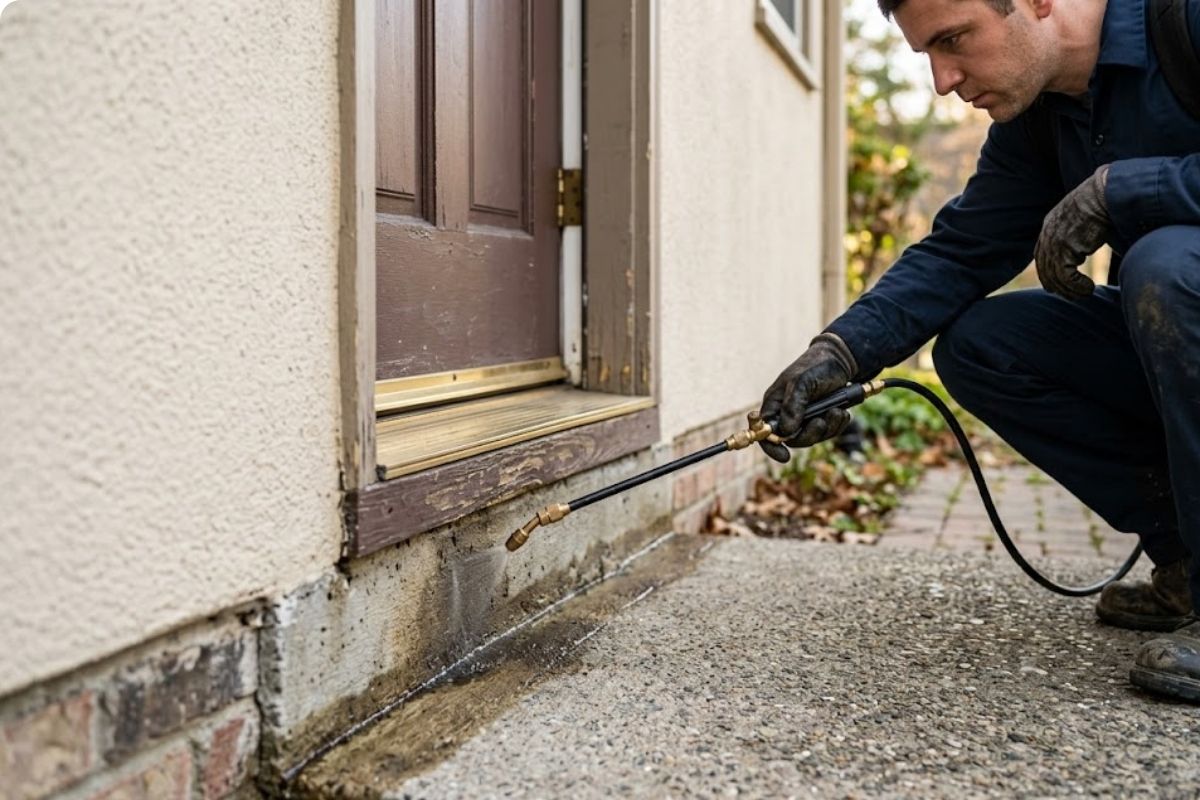
We treat both species with a perimeter barrier — residual granular bait and liquid application around the foundation, under mulch bed edges, along landscape borders, and at door thresholds. Inside, we treat baseboards, bathroom voids, and garage perimeters where centipedes and millipedes harbor.
Habitat modification is essential for long-term results. We assess the yard and recommend a few changes: keep mulch under 2 inches deep, pull it 6 inches off the foundation (the same perimeter approach we use for earwig control), clear leaf litter and ground-level debris, and grade drainage away from the structure. These changes reduce the moisture habitat that both species require right at the building perimeter.
Need centipede & millipede control in Brownsville?
Call (831) 703-7142 — Mon–Sat 7AM–7PM. No forms, just a real local team.
Call (831) 703-7142Pricing
Perimeter treatment for centipede and millipede control runs $90–$150 for residential properties. Heavy post-rain millipede migrations may require a same-day emergency application at $120–$175. Quarterly maintenance plans — often combined with a residential pest control agreement — are available for properties with recurring moisture-driven pressure.
Frequently Asked Questions
Centipedes are fast predators with one pair of legs per segment — they hunt insects and can bite. Millipedes are slow decomposers with two pairs of legs per segment — they eat decaying plant matter and are completely harmless.
Yes. It delivers a painful sting from modified front legs. The pain is intense and swelling can last 24–48 hours, but the bite is not medically dangerous for most adults. Seek medical attention if you experience an allergic reaction.
Heavy rain floods their underground and mulch-bed habitat. Hundreds of millipedes migrate upward and toward structures seeking dry shelter. This is the most common trigger for millipede invasions in Brownsville.
No. Millipedes do not bite, sting, or damage property. They curl up when disturbed and may secrete a mild skin irritant, but they are completely harmless to humans, pets, and structures.
Standard residential perimeter treatment runs $90–$150. Emergency millipede migration treatments after heavy rain are $120–$175.
Reduce moisture near the foundation: thin mulch to under 2 inches, pull mulch 6 inches from the slab, clear leaf litter, and ensure ground drainage slopes away from the house. These habitat changes are more effective than repeated chemical treatment alone.
Often, yes. House centipedes eat other insects — cockroaches, spiders, silverfish, and crickets. A large house centipede population usually means a significant prey-insect population is also present inside the structure.
Neither species damages structures. Centipedes are predators that hunt insects. Millipedes eat decaying organic matter. Neither chews wood, fabric, or wiring.
We use products labeled for residential application around pets. Pets should stay off treated perimeter areas until dry, typically 30–60 minutes. Interior treatments are applied to cracks and crevices inaccessible to pets.