Carpenter Bee Control in Brownsville, TX
Stop carpenter bees from boring into your fascia, decks, pergolas, and fence posts.
Carpenter Bees Are Not Honeybees
Carpenter bee control is the treatment and prevention of wood-boring bees (genus Xylocopa) that drill into untreated or weathered wood to create nesting galleries, causing structural damage to fascia boards, deck rails, pergolas, fence posts, and other wooden elements.
Carpenter bees are frequently mistaken for bumble bees, but they are a completely different insect with a very different impact on your property. Honeybees and bumble bees are pollinators that nest in hives, and wasps and hornets are aggressive colony defenders. Carpenter bees are different: solitary nesters that bore perfectly round, half-inch holes into wood to lay their eggs. Each female creates her own gallery, drilling a tunnel several inches deep into the wood grain.
In Brownsville, carpenter bees target untreated pine, cedar, cypress, and redwood — materials commonly used in pergolas, fence posts, porch overhangs, and fascia boards across RGV homes — from Harlingen to South Padre. The warm climate allows carpenter bees to remain active from late February through November, giving them an extended boring season compared to northern states.
Damage Carpenter Bees Cause
A single carpenter bee hole looks minor — a neat half-inch circle in a board. The damage compounds over years because carpenter bees return to the same wood structure annually, drilling new galleries alongside old ones. After 3–5 years of activity, a fascia board or deck rail can be riddled with tunnels, weakening the wood structurally — a process distinct from but comparable to termite damage.
Woodpeckers compound the problem. They hear carpenter bee larvae inside the wood and peck large, jagged holes to reach them — turning small round bore holes into major cosmetic and structural damage. In Brownsville's older neighborhoods along Palm Boulevard and in the Southmost area, we see fascia boards and porch columns that have been through years of carpenter bee boring and woodpecker excavation.
Our Treatment Process
We treat active carpenter bee galleries by applying residual insecticidal dust directly into each bore hole using a duster. The dust coats the inside of the tunnel and contacts the adult bee when it enters or exits. After treatment, we plug the holes with wood putty or caulk to prevent reuse.
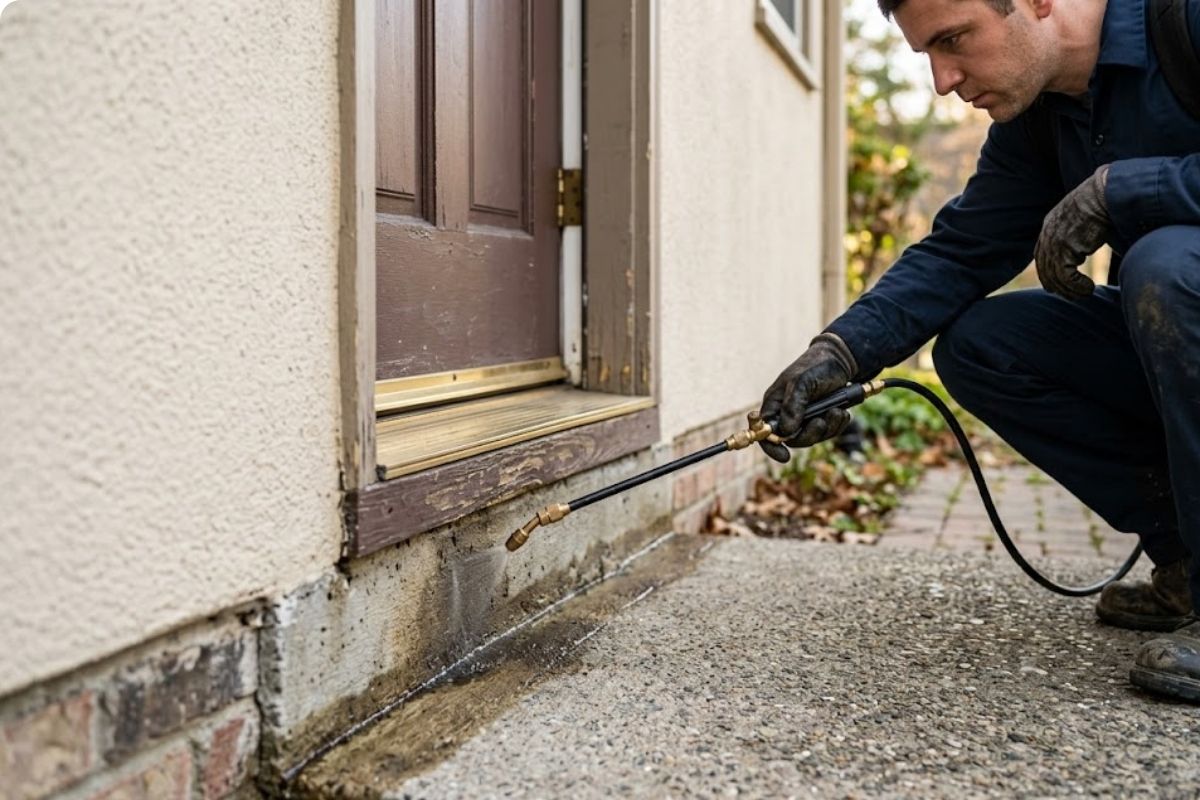
For prevention, we apply a residual spray to all untreated wood surfaces — fascia, deck rails, pergola beams, and fence posts. We also recommend painting or staining bare wood — a parallel to the moisture-management advice we give for carpenter ant prevention — which is the most effective long-term deterrent. Carpenter bees strongly prefer untreated wood and rarely bore into painted or stained surfaces.
We do not treat or remove honeybees. Honeybees are pollinators under increasing conservation concern, and removal of honeybee colonies requires a licensed beekeeper, not a pest control technician. If we identify honeybees during a service call, we refer you to a local beekeeper.
Need carpenter bee control in Brownsville?
Call (831) 703-7142 — Mon–Sat 7AM–7PM. No forms, just a real local team.
Call (831) 703-7142Carpenter Bee Treatment Cost
Treatment of active galleries (dust application + hole plugging) runs $125–$200 depending on the number of bore holes. Preventive spray application to exposed wood surfaces is $100–$175 per structure. Properties with extensive exposed wood, large pergolas, wrap-around decks, multi-section fences, are quoted on-site.
Frequently Asked Questions
No. Carpenter bees are solitary wood-boring insects that drill into wood to nest. Honeybees are social pollinators that live in hives. We treat carpenter bees but do not treat or remove honeybees — honeybee removal requires a beekeeper.
Female carpenter bees can sting but rarely do — they are not aggressive. Males are territorial and will hover near faces, but males have no stinger. Carpenter bee encounters are more startling than dangerous.
Untreated, unpainted softwoods — pine, cedar, cypress, and redwood. They rarely bore into painted, stained, or pressure-treated wood. Painting or staining exposed wood is the best long-term prevention.
Individual holes are small (half-inch diameter), but bees return to the same wood annually, drilling new galleries alongside old ones. After several years, boards become structurally weakened. Woodpeckers hunting larvae cause additional large-hole damage.
Active gallery treatment runs $125–$200. Preventive wood surface spraying is $100–$175 per structure.
Late February through November. Brownsville's warm climate gives carpenter bees an extended boring season. Peak drilling activity is in March and April when females establish new galleries.
Yes — painted or stained wood is the most effective long-term deterrent. Carpenter bees strongly prefer bare, untreated wood. If your fascia, deck rails, or fence posts are unpainted, coating them is the single best preventive step.
Yes. After applying residual dust inside each gallery, we plug bore holes with wood putty or caulk. This prevents reuse of existing tunnels by the next generation and by other solitary nesting insects.
Over multiple years, yes. Repeated boring weakens fascia boards, deck rails, porch columns, and fence posts. Properties with several years of untreated carpenter bee activity may need wood replacement in addition to pest treatment.