Earwig Control in Brownsville, TX
Earwig removal and prevention for homes dealing with moisture-driven invasions in the RGV.
Earwigs and Brownsville's Humidity Problem
Earwig control is the treatment and prevention of European earwigs and other earwig species that invade structures seeking moisture, dark harborage, and decaying organic matter.
Earwigs are moisture-dependent insects, and Brownsville's Gulf Coast humidity gives them exactly what they need. They thrive in mulch beds, under landscape timbers, beneath potted plants, and in leaf litter — all common features of RGV landscaping. Homes near the resacas in San Benito see the heaviest earwig pressure in the Valley. When outdoor conditions get too hot or dry, even briefly, earwigs migrate indoors through foundation cracks, door sweeps, and utility entry points.
Homeowners typically notice earwigs in bathrooms, laundry rooms, kitchens, and garages — anywhere indoor humidity is higher. Finding a cluster of earwigs under a doormat or inside a potted plant tray is a common Brownsville experience from April through October.
Are Earwigs Dangerous?
Earwigs are not dangerous. Despite the old myth, they do not crawl into ears. The pincers (cerci) on their abdomen can give a light pinch if handled but cannot break skin. Earwigs do not transmit disease and do not bite.
The issue with earwigs is population size. A few earwigs under a doormat is normal outdoor biology. Dozens inside your bathroom every morning is an infestation. We see it in Brownsville homes with poor foundation sealing or chronic moisture, and it points to entry points and damp conditions that need a professional pest inspection.
Our Earwig Treatment Approach
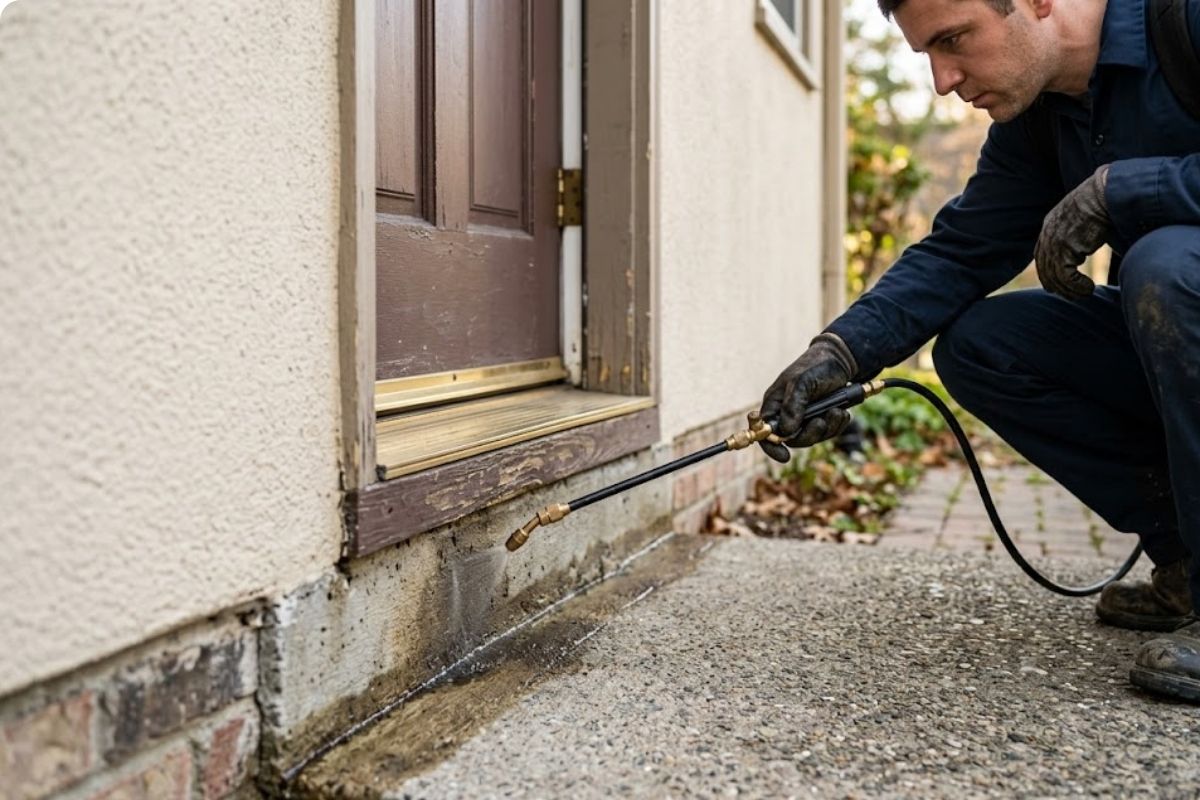
We treat earwigs by combining perimeter barrier treatment with moisture-source management. A residual liquid applied to the foundation perimeter, mulch bed edges, landscape timber borders, and entry points creates a contact barrier that kills earwigs before they reach the interior.
Inside, we treat baseboards, door thresholds, bathroom voids, and laundry room areas where earwigs concentrate. We also flag the moisture driving the infestation, the same conditions that attract silverfish and other humidity-loving pests. Common culprits: leaking exterior faucets, clogged gutters pooling against the foundation, sprinkler heads hitting the house wall, and over-mulched beds holding moisture against the slab.
Fixing the moisture source is often more effective long-term than any product we apply. If your sprinkler system is wetting the foundation wall every night, earwigs will return regardless of treatment until that irrigation is redirected. The same principle applies to centipede and millipede control — fix the moisture, fix the pest.
Need earwig control in Brownsville?
Call (831) 703-7142 — Mon–Sat 7AM–7PM. No forms, just a real local team.
Call (831) 703-7142Earwig Control Cost
Standard residential perimeter and interior treatment runs $90–$140. If the fix calls for moisture work, like regrading, gutter repair, or irrigation adjustment, we flag it during the inspection and walk you through it. The assessment is free, and most homeowners or their landscaper handle the work themselves.
Frequently Asked Questions
No. Earwigs do not bite, do not transmit disease, and do not crawl into ears despite the name. The pincers on their abdomen can give a light pinch if handled but cannot break skin.
Earwigs seek moisture. Bathrooms, laundry rooms, and kitchens have higher indoor humidity. Earwigs enter through foundation cracks, door gaps, and utility penetrations, then gravitate to wet areas.
Moisture is the primary attractant. Mulch beds against the foundation, leaking faucets, clogged gutters, and sprinkler systems wetting the house wall all create conditions that draw earwigs toward your structure.
Reduce moisture around the foundation. Pull mulch 6 inches from the slab, fix leaking faucets, adjust sprinklers away from the house, and clear gutter clogs. These changes reduce earwig pressure more than any chemical treatment alone.
Residential perimeter and interior treatment runs $90–$140. The inspection and moisture assessment are included at no extra charge.
April through October is peak season, driven by warm temperatures and rain increasing outdoor moisture. However, earwigs can appear year-round in Brownsville due to the mild winters and persistent humidity.
Earwigs do not cause structural damage. In large numbers they may damage seedlings, flower petals, and soft-stemmed garden plants, but they do not chew wood, fabric, or wiring.
Some earwig species have wings and can fly short distances, though they rarely do. The European earwig found in Brownsville has vestigial wings and does not fly.
Through cracks in the foundation slab, gaps under doors, weep holes in brick veneer, and around pipe and wire penetrations. Sealing these entry points is part of our treatment approach.