Fly Control in Brownsville, TX
House fly, blow fly, and cluster fly treatment for homes, restaurants, and commercial kitchens.
Fly Pressure in Brownsville's Gulf Coast Climate
Fly control is the reduction and prevention of house flies, blow flies, cluster flies, and other filth-breeding fly species in residential and commercial environments through sanitation guidance, exclusion, and targeted treatment.
Brownsville's subtropical humidity and year-round warmth create conditions where flies breed continuously. Unlike northern cities where fly pressure drops to near zero in winter, the Rio Grande Valley sustains active fly populations in every calendar month. A single female house fly produces 500 eggs in her lifetime, and in Brownsville's heat those eggs reach adulthood in as little as 7 days.
Restaurants along Boca Chica Boulevard and International Boulevard face constant fly pressure from dumpster areas, grease traps, and loading docks. Residential neighborhoods near agricultural areas — the produce fields west of town, the citrus groves north toward Harlingen — deal with blow flies drawn to decaying organic matter. Even well-maintained homes get fly intrusions when doors open frequently in summer.
Species We Treat — and What We Do Not
We treat house flies (Musca domestica), blow flies (Calliphoridae family — the metallic green and blue species), and cluster flies (Pollenia rudis). These are the filth-breeding and structure-invading species that pest control addresses.
We do not treat fruit flies, drain flies, or fungus gnats. These are sanitation and plumbing issues that resolve by eliminating their breeding source — overripe produce, clogged drains, and overwatered plant soil respectively. If you call about small flies in your kitchen, we will help you identify the species and point you toward the right fix, even when that fix is not a treatment we perform.
Our Fly Control Approach
Fly control starts with source identification, not spray. A thorough pest inspection locates the breeding site before any product is applied. The most effective step is finding and removing the breeding site. That might be a forgotten trash bag under a cabinet, a dead animal in a wall void, an uncovered dumpster, or a grease trap nobody has cleaned. Without addressing the source, any spray treatment is temporary.
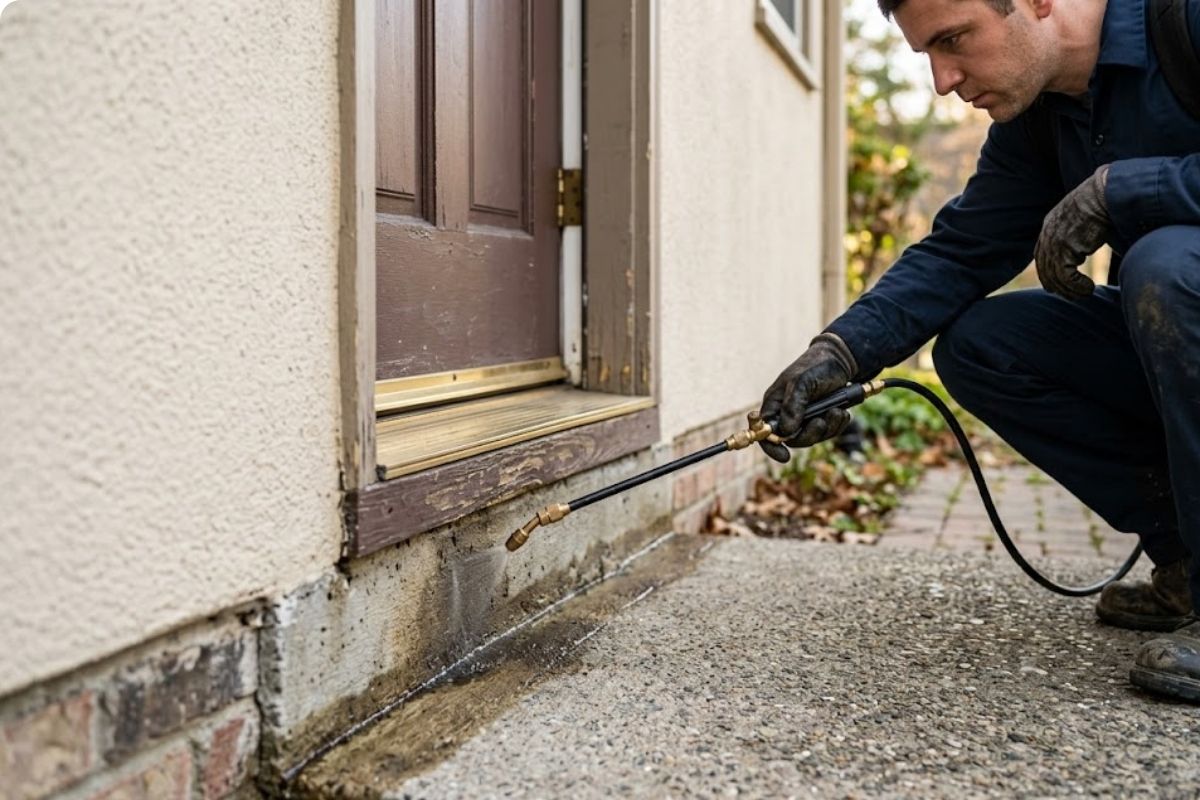
Once the source is managed, we apply residual treatments to surfaces where flies land and rest — window frames, door frames, eaves, porch ceilings, and exterior walls near entry points. For commercial kitchens and restaurants, we install and service insect light traps (ILTs) that capture flies continuously without chemical application in food-prep areas.
Exclusion matters too. Door sweeps, self-closing mechanisms, air curtains at loading docks, and screens on windows prevent re-entry. We assess and recommend specific exclusion improvements during every fly-control service call.
Need fly control in Brownsville?
Call (831) 703-7142 — Mon–Sat 7AM–7PM. No forms, just a real local team.
Call (831) 703-7142Commercial Fly Control for Brownsville Restaurants
Health inspectors in Cameron County cite fly activity as a violation. Waterfront restaurants in Port Isabel and coastal tourism areas face especially strict scrutiny. A single fly sighting during a health department visit can result in a point deduction that drops a restaurant's score publicly. For food service businesses, fly control is a regulatory requirement, not an optional service.
Our commercial fly program includes monthly exterior perimeter treatment, interior ILT installation and bulb replacement, dumpster-area treatment, and written documentation for health inspection records. We coordinate service timing with your operating hours to minimize disruption.
Fly Control Pricing
Residential one-time fly treatments run $100–$175. Commercial restaurant programs with monthly service and ILT maintenance start at $125 per month depending on square footage and exposure level. Source-identification inspections are included in every service call at no separate charge.
Frequently Asked Questions
Brownsville's year-round warmth sustains continuous fly breeding. Common sources are uncovered trash, pet waste in yards, dead animals in wall voids, and open doors without screens. Finding the breeding source is the first step.
No. Fruit flies and drain flies are sanitation and plumbing issues, not pest control targets. We can identify the species during an inspection and advise on the correct fix — typically removing overripe produce or cleaning clogged drains.
Monthly exterior perimeter sprays, interior insect light traps, dumpster-area treatment, and exclusion improvements. We provide written service records for health inspection documentation.
One-time treatments run $100–$175. The cost depends on property size and whether an active breeding source needs remediation. Inspection is included.
Indoor spray provides temporary knockdown but does not solve a fly problem. The only lasting solution is eliminating the breeding source — rotting organic matter, a dead animal, uncleaned drains. We identify the source during every service call.
A female house fly lays around 500 eggs in her lifetime. In Brownsville's heat, eggs develop to adults in as little as 7 days. This is why a small fly problem can become a large one within two weeks if the source is not addressed.
Yes. Air curtains at entrances and loading docks are one of the most effective exclusion tools for commercial properties. We recommend models and placement during our commercial fly-control assessments.
House flies carry over 100 pathogens including Salmonella, E. coli, and Shigella. They pick up bacteria from waste and transfer it to food surfaces, utensils, and counters by landing. In a commercial kitchen, this is both a health risk and a regulatory liability.
Monthly is the standard for Brownsville restaurants due to year-round pressure. High-volume locations near dumpster areas or open-air seating may benefit from bi-weekly exterior treatment during peak summer months.