Scorpion Control in Brownsville, TX
Scorpion identification, removal, and exclusion for homes in South Texas.
Scorpions in South Texas Homes
Scorpion control is the identification, treatment, exclusion, and prevention of scorpion species that enter residential and commercial structures, posing sting risk to occupants.
The striped bark scorpion (Centruroides vittatus) is the species our technicians encounter in Brownsville and across the Rio Grande Valley. It is the most common scorpion in Texas — a 2–3 inch, pale-yellow nocturnal predator that hides in dark crevices during the day and hunts insects at night.
Scorpion encounters inside homes spike in two seasons: spring (March–May) when scorpions leave winter harborage to hunt, and late summer (August–September) when extreme heat drives them indoors seeking cooler shelter. Brownsville and Los Fresnos homeowners find them in shoes left on the floor, inside folded towels, under bathroom sinks, and in garages.
How Dangerous Are Scorpion Stings?
A striped bark scorpion sting is painful — comparable to a wasp sting — but rarely medically serious for healthy adults. The sting site swells, burns, and may tingle for several hours. Over-the-counter pain relievers and ice are typically sufficient treatment.
The risk is higher for small children, elderly individuals, and anyone with allergic sensitivity. In these cases, a sting can cause more intense reactions including nausea, muscle spasms, and difficulty breathing. If a child under 5 or an elderly person is stung, we recommend contacting Valley Baptist Medical Center or seeking urgent care as a precaution.
Our Scorpion Treatment and Exclusion Process
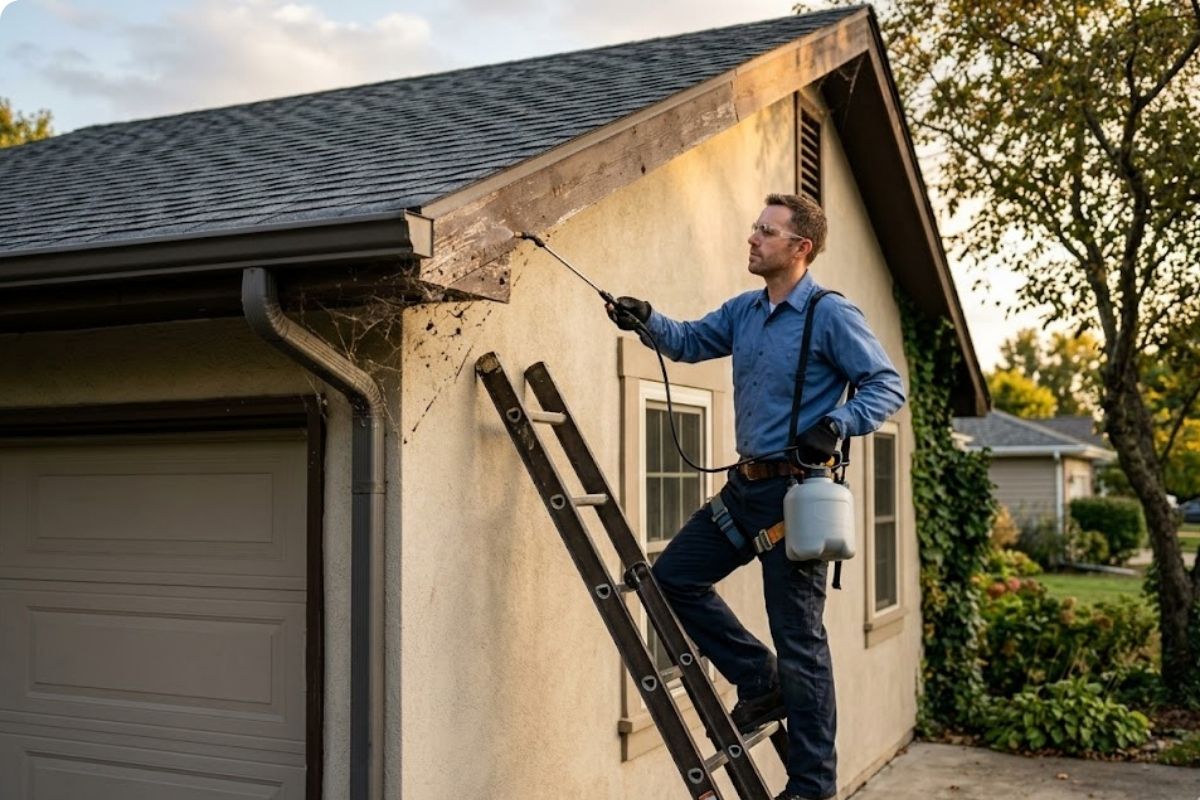
Scorpion control is about exclusion — sealing the gaps they use to enter your home. Scorpions can compress their bodies flat enough to fit through a gap the width of a credit card. Our process starts with a detailed pest inspection of the foundation perimeter, door thresholds, window frames, weep holes, utility penetrations, and garage door seals to identify every possible entry point.
We seal gaps with weather stripping, door sweeps, caulk, and copper mesh as appropriate. We also apply a residual perimeter spray that kills scorpions on contact as they cross the treated barrier. Inside, we treat baseboards, closet corners, bathroom voids, and garage perimeters where scorpions harbor.
Because scorpions eat other insects, reducing the prey population inside your home also reduces scorpion attraction. If we find heavy cricket, roach, or spider activity during a scorpion inspection, we address those populations simultaneously — removing the food source that drew scorpions indoors in the first place.
Need scorpion control in Brownsville?
Call (831) 703-7142 — Mon–Sat 7AM–7PM. No forms, just a real local team.
Call (831) 703-7142Scorpion Control Cost in Brownsville
Residential scorpion treatment with exclusion sealing runs $150–$250 depending on the number of entry points found. Ongoing quarterly perimeter maintenance is $90–$130 per visit. Properties with heavy surrounding brush or block construction (more crevice harborage) trend toward the higher end.
| Age Group | Typical Reaction | Severity | Action Recommended |
|---|---|---|---|
| Healthy adults | Pain, swelling, tingling at sting site | Low | OTC pain relief, ice |
| Children under 5 | Intense pain, possible nausea or muscle spasms | Moderate-High | Seek urgent care |
| Elderly (65+) | Prolonged symptoms, potential cardiovascular stress | Moderate | Monitor closely, consider urgent care |
| Allergic individuals | Anaphylaxis possible | High | Emergency medical attention |
Frequently Asked Questions
The striped bark scorpion (Centruroides vittatus) is the primary species in the Rio Grande Valley. It is 2–3 inches long, pale yellow, and nocturnal.
For healthy adults, a sting is painful but rarely serious — similar to a wasp sting. Children under 5, elderly individuals, and allergic persons face higher risk and should seek medical attention after a sting.
Spring (March–May) and late summer (August–September) are peak entry periods. Spring emergence from winter harborage and late-summer heat both drive scorpions indoors.
Through gaps as narrow as a credit card — under doors, around window frames, through weep holes, around pipe penetrations, and under garage door seals. Exclusion sealing is the core of lasting scorpion control.
Initial treatment with exclusion sealing runs $150–$250. Quarterly perimeter maintenance is $90–$130 per visit.
Yes. Scorpions enter structures to hunt prey insects. Reducing cricket, roach, and spider populations inside your home removes the food source that attracts scorpions.
Yes. Scorpions fluoresce bright blue-green under ultraviolet light. A UV flashlight at night is a reliable way to find scorpions on your property and inside your home.
Bark scorpions are somewhat gregarious and can cluster in small groups in tight harborage — inside block walls, under bark, inside shoe storage. Finding one scorpion often means others are nearby in the same void.
Exclusion sealing dramatically reduces scorpion entry. Combined with perimeter spray treatment and prey reduction, most homes see a 90%+ reduction. However, no structure is perfectly sealed — quarterly maintenance catches stragglers.