Silverfish Control in Brownsville, TX
Silverfish removal for homes and businesses dealing with these moisture-loving, paper-destroying pests.
Silverfish in Brownsville Homes
Silverfish control is the identification, treatment, and prevention of silverfish — small, wingless, silver-gray insects that feed on starchy materials including paper, book bindings, wallpaper, and stored documents.
Silverfish are among the most humidity-dependent household pests, and Brownsville's year-round Gulf moisture makes it one of the best environments in the country for silverfish populations. Coastal communities like Port Isabel and South Padre see even higher humidity. These nocturnal insects hide during the day in dark, undisturbed areas — inside boxes of stored papers, behind baseboards, under bathroom vanities, in closets, and in attic insulation — emerging at night to feed.
Many Brownsville homeowners do not notice silverfish until they spot the damage. Look for irregular holes chewed in paper, yellowed edges on stored photos, and the shed skins and tiny dark specks they leave in drawers and on shelves.
What Silverfish Damage
Silverfish feed on cellulose and starch. In practical terms, that means they eat paper, cardboard, book bindings, wallpaper paste, photographs, cotton and linen fabrics, and even the glue on postage stamps and labels. A silverfish population living in a box of stored family documents can cause irreversible damage over months.
They also consume dried food products — sharing pantry habitat with cockroaches that target the same food sources, flour, cereal, pasta, and pet food, though this is less common than paper damage. In commercial settings, silverfish in record-storage rooms, libraries, and archives are a serious preservation threat.
Treatment and Prevention
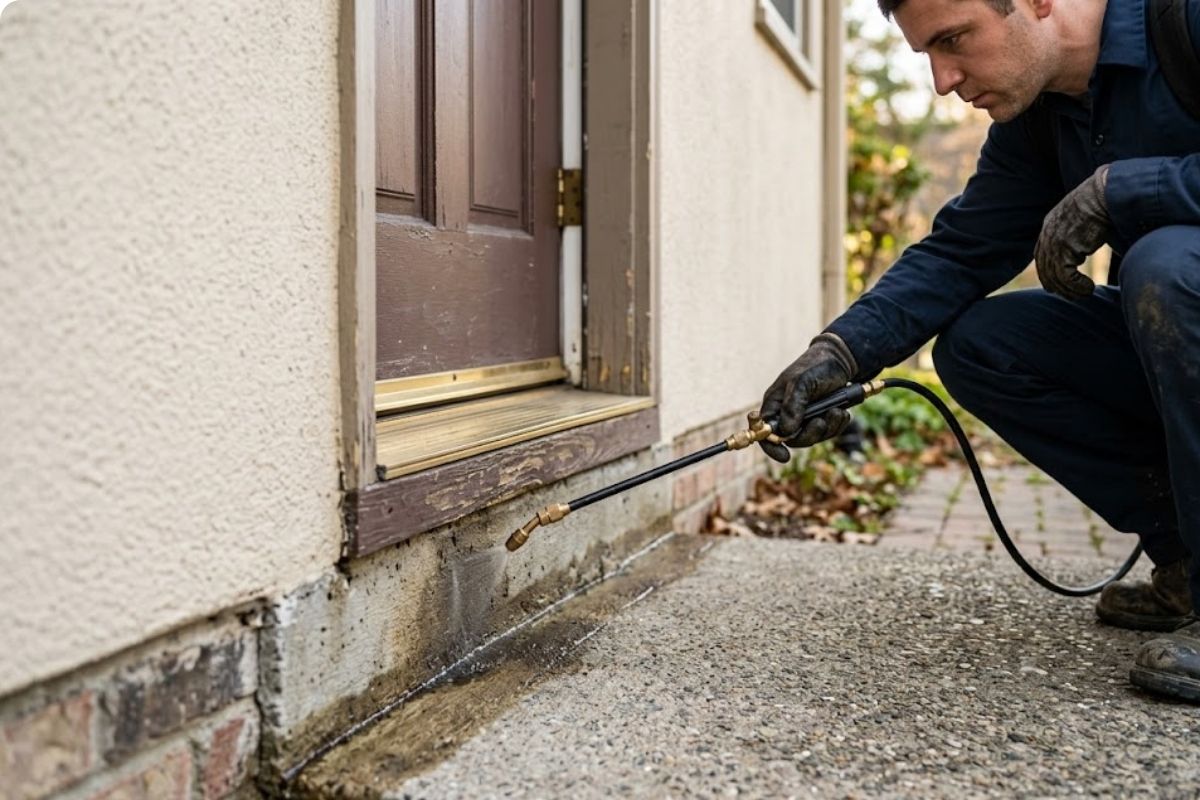
Our silverfish treatment targets the harborage areas where populations concentrate. We apply residual dust in wall voids, crack-and-crevice treatment along baseboards, and bait in dark, undisturbed areas like closet corners, attic access points, and storage-room shelving.
Because silverfish are moisture-dependent, humidity reduction is as important as chemical treatment — the same moisture-management principle behind effective earwig control. We assess each property for moisture conditions and recommend specific fixes: bathroom exhaust fans that vent to the exterior (not into the attic), dehumidifier placement in closets or storage rooms, and proper ventilation in attic spaces. Bringing indoor humidity below 60% makes the environment hostile to silverfish reproduction.
For stored items, we recommend switching from cardboard boxes to sealed plastic bins. Silverfish cannot chew through plastic, and sealed containers eliminate the dark, humid microenvironment that silverfish prefer.
Need silverfish control in Brownsville?
Call (831) 703-7142 — Mon–Sat 7AM–7PM. No forms, just a real local team.
Call (831) 703-7142Silverfish Treatment Pricing
Residential silverfish treatment runs $100–$160, covering inspection, harborage treatment, and moisture recommendations. Follow-up visits for persistent populations are $75–$110. Commercial archive and record-storage treatments are quoted based on room size and shelving volume.
Frequently Asked Questions
Silverfish do not bite or transmit disease. Their damage is to materials — paper, books, photographs, wallpaper, fabrics, and dried foods. In Brownsville's humid climate, an untreated population can cause significant damage to stored items.
Silverfish require humidity above 60% to thrive. Brownsville's Gulf Coast climate maintains high humidity year-round, making it one of the most favorable environments in the country for silverfish populations.
Dark, undisturbed, humid locations — inside boxes of stored papers, behind baseboards, under bathroom vanities, in closet corners, in attic insulation, and between stacked books or documents.
Store papers and photographs in sealed plastic bins instead of cardboard boxes. Use silica gel packets to reduce moisture inside containers. Keep storage areas ventilated and below 60% humidity when possible.
No. Silverfish cannot chew through plastic. Sealed plastic bins are the most effective physical barrier for protecting stored items from silverfish damage.
Residential treatment runs $100–$160 for initial inspection and harborage treatment. Follow-up visits are $75–$110 if needed.
Most populations show significant reduction within 2–3 weeks. Dust treatments in wall voids and harborage areas continue working for months. Persistent populations may require a follow-up application.
Often, yes. A significant silverfish population suggests elevated indoor humidity — possibly from poor bathroom ventilation, attic moisture, or foundation seepage. We assess moisture conditions during every silverfish inspection.
Yes. Record-storage rooms, archives, libraries, and offices with paper-heavy storage are common silverfish targets. We treat commercial silverfish problems with specialized harborage applications and humidity management plans.